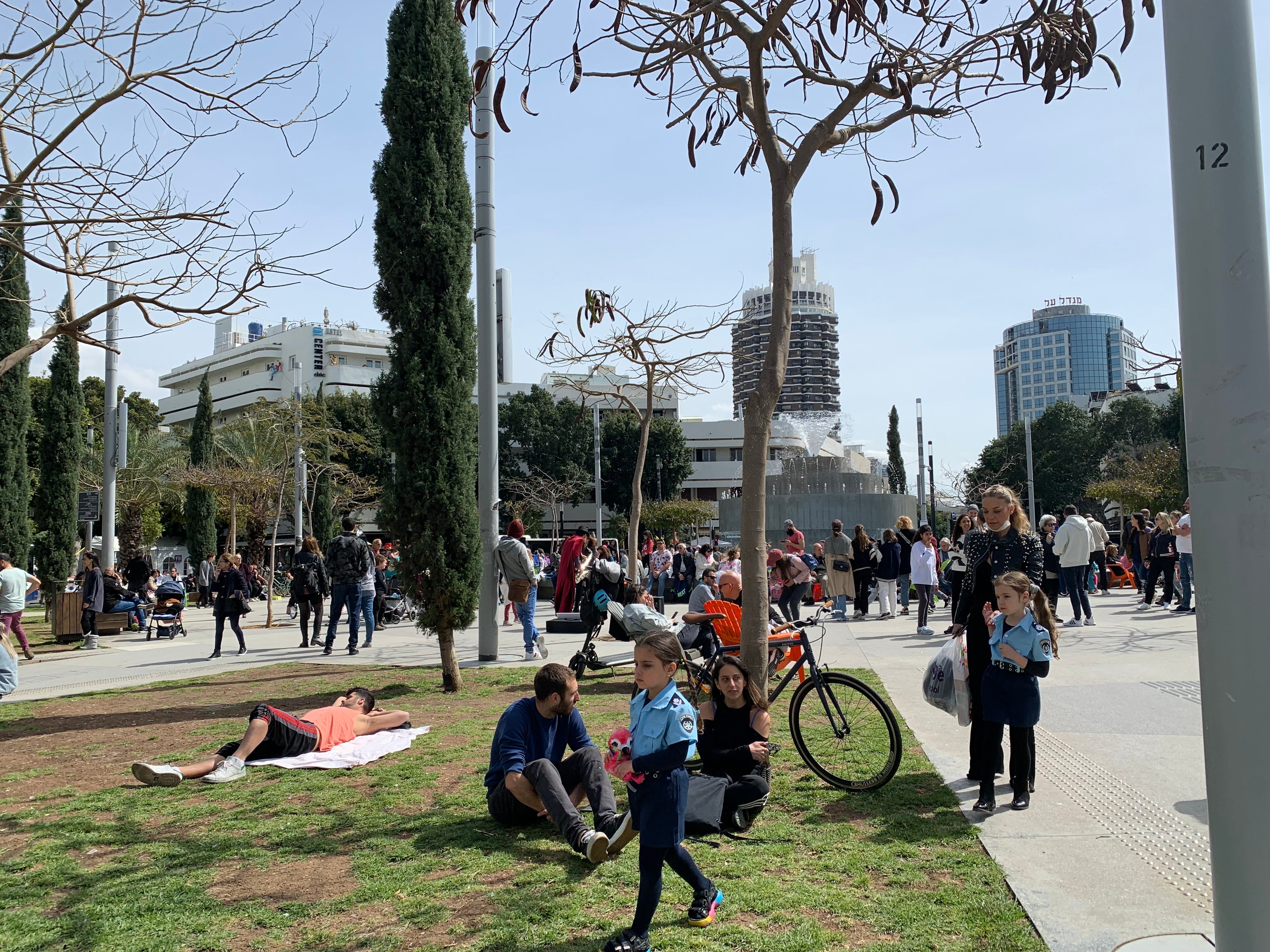
Tel Aviv + physical space

In some tech and venture capital (i.e. Twitter) circles, there’s a lot of talk about the metaverse—virtual reality, headsets, connecting, learning, living online.
There are clear benefits to such technologies. One of them is access to anyone in the world. The Collapse of Space, we might title the era of Web 2: the proliferation of tech behemoths Google, Facebook, Microsoft, and others that democratize our access to information and one another.
The question arises: what of physical space? Will our concrete existence soon become a relic of the past, or does it stay, necessarily, given that we are not only brain and heart, but body—an obvious but easily ignored fact?
Most likely, I believe we will chart a middle course—a physical existence enabled by technology. The more unspoken side of that equation is not the companies enabling the tech, but the cities and communities and institutions optimizing our physical spaces, and therefore the quality of our lives.
WeWork and Launch House are two organizations dedicated to the physical environment. Daisy, Kasa and other prop-tech companies are similarly bullish on us keeping our bodies.
During the 1950s, the (Jewish) Conservative Movement decided to allow driving to the synagogue. This was the beginning of the end of American Conservative Judaism, because it allowed families to live further apart from one another. Living farther apart meant fewer shared Shabbat meals. Fewer meals meant fewer relationships, and an erosion of community.
In Tel Aviv, I generally go to a shul called 126. There is a big kiddish every week. It clearly costs at least few thousand shekels. This past shabbat, a friend and I were wondering aloud who might sponsor such an event so frequently. Tel Aviv doesn’t have the older / wealthier religious crowd common to Jerusalem or New York. Nor was there a simcha each week. So we wondered, who pays?
We didn’t solve the mystery (we didn’t try so hard), but my friend said something fascinating:
“Kiddish seems kinda tangential to the shul experience, but it isn’t. It’s absolutely essential—nothing less than the glue of community. Without it, many people wouldn’t come to shul, and even if they did, they would go right home afterwards, not shmoozing and building relationships.”
Thousands of years ago, when homoscapians were hunter and gatherers, we lived in tribes. Lots of cultural commentators cite this point to bolster the claim that the size of our networks are limited. But what’s also remarkable—though it seems inconsequential—is that we lived with these people, in person.
I believe in Tel Aviv for many reasons. One of them is it feels more like shtetl than city—kids playing and yelling, bus drivers playing music out loud, seeing your coworkers at the gym, knowing the falafel-stuffers of the places you frequent by name, the availability of mishloach-manot at the supermarket.
#jointhemovement